I can’t actually believe we are coming up on a decade in Hong Kong. The kids are fully fledged teenagers, we are now permanent residents (we have that handy card that gets us through immigration at the airport really, really fast…), and yes, we have a dog.
So that’s it then. I think it’s a sign that we may never be leaving, or not for the foreseeable future anyway. I figure once you commit to the dog, it’s game over and you are staying put. Cats, not so much – they are independent creatures who barely have time to acknowledge anyone’s existence nevermind emotionally attach themselves (we have two of them, equally contemptuous). It’s actually a bit of a menagerie around here and yesterday my eldest was complaining that it was far too distracting to study amongst all the animals. But honestly? A beetle crawling slowly into the corner would distract a sixteen-year-old from studying. A crumb on the table distracts him.
My boys board weekly at their school about 30km outside the city so to fill the Monday to Friday void in the apartment, Mr. C and I decided to get a dog – well, we weren’t going to do anything as rash as have another child, so as it turns out we did the closest thing possible but I didn’t know it at the time. I feel like we were sending ourselves a message because there is such a permanence to the responsibility that we’ve taken on. And just so we’re all clear on this, we didn’t do it for the kids (although the video of the surprise puppy waiting at home for them when they came back from school was priceless). We are not so naive to think that they will actually look after her, take her for walks when there are far more pressing appointments on Snapchat to attend to, or participate in any meaningful way in the effort to keep her alive other than rolling about on the floor with her. So she belongs to the adults and the children amuse her. Her name is Lucy Liu and regardless of the role we each play in her life, we all adore her.
I have always been scared of dogs and I never thought I would own one. But then again, I never thought I would be in Hong Kong for a decade either. Didn’t really see myself as a mother of teenagers. Or twenty-five years married and that one’s coming up – not that I thought I’d be divorced, I just didn’t see it coming. Or menopause. Who knew that treat was around the corner?
So while some things stay the same, I guess I should embrace the changes.
It’s especially easy when change has four legs, golden fur, and big sad eyes.
I am experiencing upheaval. There is a full moon on the horizon and there is movement afoot. They say that there are a few life events that cause extreme stress: death, illness, divorce and arguably listening to Canto Pop music. Someone has lobbed a stone into the still waters of my personal oasis and its ripples are spreading out over everything. I’m not referring to the latest Trump blunder, or Silverman upsetting the conservatives, or the latest comments on the relative hotness of Justin Trudeau. I’m not even talking about the newly fashioned version of the Pirelli Calendar – all highly relevant and worthy of billions of social media posts I am sure. I’m speaking of a much smaller and seemingly insignificant act which has no Facebook posts but has had a far greater impact on my life than any other since my children were born. My darling husband has left his job.
Sometimes the smallest act leads to the biggest revelations;the repercussions are felt way beyond the initial effort. When something changes, and things stop functioning the way they always have, you need to sit down and question why and how and what for?It is an opportunity for a bit of self-examination, to throw it all down on the ground, pick up the important bits and put them back together differently. You may not be familiar with the Lego Movie (as an aside, I urge you to go watch this flick because there is not one line from Batman that isn’t funny), but in between the sentimental catch phrases and action sequence banter, the gist of the plot revolves around a special group of master-builders who redesign all the carefully construed, over-priced brick models to make super cool stuff of their own. Imagine, if you will, busting up the giant Lego Death Star that took you the better part of your life to build; but then, you get to choose the most excellent parts to fashion something new and utterly unexpected.This is exactly what happened when all of a sudden our family dynamic changed, seemingly overnight.
The reason we came to Hong Kong was my husband’s job.It was a work opportunity which we pursued, not something that was thrown at us, and we evaluated it carefully before we left (if careful evaluation involves several glasses of Cabernet Merlot and scribbling down a venn diagram on the kid’s drawing easel late on a Tuesday evening).We had a plan.Well, we had a sort of vague idea of where we wanted to be and how we wanted to live and it’s probably best not to get bogged down with too many details.This Hong Kong opportunity has opened up so much for us that we never could have seen it coming – another life lesson I have learned is to never make assumptions about something – or somewhere – you know little or nothing about.Our two year gamble became a seven year game changer.And then my other half, after careful deliberation, decided to retire.
So, if the reason for being in a place not longer exists, what happens next?The obvious thing to do is pack your bags and go home, but for us home is more than one place. It is a complicated jumble of emotions and memories, not necessarily a city to live in. So we need to be much more practical in our approach and selective when choosing those pieces from the Death Star, which if you remember, is strewn all over the floor.We take out the bits that are important and suddenly a new version comes to fruition before our eyes.We line our priorities up like the usual suspects:opportunity for work, education, climate, proximity to family, quality of life, school holidays… we are governed by how much time our children are not at school because long school holidays means enough time to see our families overseas.And this is where is gets surprising.Sometimes what looks like a situation born of necessity is actually a conscious choice made for reasons truly best known to to ourselves.
There is never a perfect answer; all situations will be different for everyone. I have found over the years of living abroad that you can ask one hundred people where they think the best place on earth is to live and you will get one hundred different answers, partly to do with the latest internet tweet on Top Ten Cities To Live, but mostly due to a wonderful thing called Perspective. We all have one. Just like those Lego master-builders, each and every one of us has a different way to see things. I am always drawn to books for examples in life and again I see lessons from a picture book by Anthony Browne which we often use in our Library to teach children the important value of Perspective. Voices In The Park (Dorling Kindersley) tells 4 versions of the same walk in a park and each is so radically different you get the surreal sensation none of them are having the same experience.
Like the 4 characters in the book, we all bring our own baggage and experience to a situation, so who better to decide our own course of action than ourselves? A friend’s Lego might be wonderful and original, but it comes from a place that is unique to them and reflects their own values and careful considerations. Another friend might have never smashed up their original in the first place, and that’s OK too.
And so, for us, after careful scrutiny and reflection we have made a huge decision:to move down the road.Yes.Down. The. Road.Over to a new neighbourhood, a bit greener with more access to the outdoors for our kids, a bit more removed from our current urban dwelling.In our new space maybe we can give ourselves a bit of breathing space before jumping into any big decision.After all, we wouldn’t want to get carried away. It takes some time to build new Lego.
Expat families are used to upheaval, and change is what keeps some people going. Even when we started our family in London, we changed address with monotonous regularity.I opened my mother’s address book a while ago to find 2 pages of crossed out entries under my name – you would think she might have learned to write it in pencil. I can remember each and every one one of those places fondly (except maybe the one that had the bolt lock so you could get trapped in the hallway on your way out to work, but that’s another story and we didn’t stay long for obvious reasons).I am quite used to moving. Apart from the messy administration, I am not so bothered by the process no matter how much I like to complain about it.It is at the very least a chance to de-clutter, which I am told is the path to enlightenment. And given the possibility of a monumentally disruptive transatlantic relocation, I am happy that our little domestic adjustment has lead to the decision to stay routed in this crazy transient city, at least for the time being.
Maybe age is making us reticent to change, or I don’t want to mess with pre-teens who are well adjusted and happy. Perhaps we are just not ready to leave. Or maybe I just feel the need for more time to fully appreciate Canto Pop. Whatever our reasons, it comes from our unique perspective which is sometimes just impossible to explain. I am excited by the prospect of a change of scenery, a little space to breathe and a new view to appreciate all the things around me. It will help me gain perspective.
The idea of living in little boxes stacked one on top of another is to me fairly preposterous and one we might tend to associate with modern living, but in actual fact it is not such a recent concept at all. Ancient Rome boasted living quarters with multi stories to house the thousands of inhabitants that dwelled within the city walls, but they were constrained by the limitations of 1st century engineering. Two thousand years later, when the first passenger elevator was installed in New York City, there was no limit to the heights that humans could ascend, stacking ourselves into the heavens. So many civilisations have gone to great lengths to reach closer to the clouds and it seems that we have now almost nailed it. As of 2015, the tallest residential apartment building stands at 426 meters (432 Park Avenue in New York City) just slightly topping out The Princess Tower in Dubai at 414 meters, although the Dubai building has more floors and you can actually get up to the 100th, which to me, seems completely ludicrous.
If you had asked me three years ago, I would have told you that living in an apartment building of any shape or size was something that you would catch me doing just before hell froze over.Mephistopheles must be shivering, because here I am on the 31st floor of a high rise overlooking the sprawling urban landscape of Hong Kong and Kowloon beyond, mesmerised by the uniqueness of what lies beneath.It is an astonishing example of humans’ natural tendency – or need – to expand outwards, and indeed, upwards.On a clear day we can see right to the hills of the New Territories far beyond the sprawling towers, while the night-time spectacle of twinkling lights is like a year-round Christmas card and a poignant reminder that there are so many individual lives being lived around me and I am not the only one; I am part of something much bigger than myself.
To be honest, I should never have been so presumptuous to come to the conclusion I would hate it before I tried it.After all, how many times have I insisted to my children that until they actually try the sweet and sour eggplant they will never know for sure they hate it?
The truth is that sweet and sour eggplant can be quite tasty, something that grows on you the more times you eat it.Likewise, I have come to rather like apartment dwelling in the same way you might like lime green, or hot bikram yoga or Justin Bieber’s music – you’ll give it a go, and appreciate it’s appeal, but it will probably not become your all-time favourite. I have discovered there are quite a few advantages to living in a high rise building.Firstly, there is the efficient use of space, where no corner of the apartment is left unused;every nook and cranny is taken up with a purpose or function and this I find makes for a very neat and tidy arrangement.As a prerequisite for this order, there is just no room for crap.I do make space for the children’s art pieces from pre-school, and the football medals, the family memorabilia, the piano that nobody really ever plays but looks good in the living room and yes, the mangy leather chair that the cat scratched up, but this confined living forces me to seriously consider what I need and what I must consign to the thrift shop, or in extreme cases the round filing cabinet underneath the sink.
And then of course there is the view.It is one of the magnificent advantages of being perched up in the sky, sharing the space with the black-winged kite hawks that soar outside the windows at our eagle eye level, high above the Hong Kong harbour.It is a marvel to me every time I look out what mankind is capable of, and a sharp reminder of how many of us need to fit onto this planet we call home.It does a person good to remember that daily.
There is another consequence of the 31st floor, and that is the elevator (or lift, depending on your provenance).It is truly the most unnatural of spaces.Imagine this if you will: you walk out your front door and see your neighbour from three doors down so you walk over and stand next to them for a full minute, shoulders almost touching, keeping still and breathing within a foot of them, not moving away for a moment.If that does not seem like the most socially awkward moment imaginable, I’m not sure what is. And yet, because of this awkwardness, elevator time gives rise to the most interesting glimpses of the human condition.The conversations that I have (or indeed that I do not have) in the 48 seconds that it takes to ascend or descend can enlighten, entertain, and serve to pique my curiosity to the point of obsession.
The doors open and in walks a young woman with a very large suitcase, her structured Hermes handbag incongruent with her age.She has papers in her hand, which I can only assume are her tickets and there are beads of sweat forming on her delicate forehead – which is so close I can see each one appear.Where is she going?Is it far away?Judging from the size of her case, she might be gone for months.Is she going to meet someone, or on a business trip or has she just scored a modelling contract?
Or the middle aged guy who hobbles in on crutches, me flailing with the buttons to keep the door open and accidentally pressing the wrong one so they close in, dangerously close to crushing his foot.I consider what might have happened to him, making up all sorts of stories in my mind.Did he fall?Is it his ACL?Did he go to the same doctor as me? He looks sporty enough, maybe he did it playing tennis or skiing.Or maybe he slipped in the parking lot.
Or what about the nice man who was going in for an endoscopic sinus operation and we had a lovely conversation about books he could read in the hospital?We had a followup conversation in the lobby but I haven’t seen him for some time.Perhaps he moved out.That would be sad as he is one of my elevator friends and we did have some nice conversations in the lift.I told him that I was a Librarian.I have no idea what he did for a living, but I know he had a bad case of sinusitis and liked to read.
It seems odd to have these flashes of lives lived before you in just a few seconds within a very confined space, as if you are witnessing a snapshot of someone’s life, standing still with them for a fleeting moment, sharing it.
The morning bus brigade is an altogether more chatty group and we all know exactly what’s going on with each other.We emerge each morning, bleary eyed shepherding our children to catch the various school buses that pull up on the roundabout outside the front doors.This community is bound together by our focus on not-missing-the-bus.The common ground we share is the silent acceptance that we have all been up for the past half hour screaming some sort of version of ‘where are your shoes, why do you not have your shoes?’ at children who have no sense of urgency whatsoever.When my son and I enter the lift we make full use of the ride to the bottom, beginning with socks, then shoes, followed by the quick tie-knot and the shirt-tuck.Sometimes we even have time to look through the school bag to see what homework we have forgotten, but really, we both know by then it is too late.Neither one of us have the time or inclination to go back up 31 floors to retrieve it.
After the morning rush with the children and the residual commuter traffic, the encounters become much more random, and therefore the likelihood of common ground diminishes.And so, when these elevator moments get just too uncomfortable to bear, there is always the distraction of the phone.Twiddling on the phone is an ideal diversion from having to actually make eye contact with your apartment neighbour during the excruciating journeys in forced confinement.The problem is that there is absolutely no reception in the lift, thereby rendering it impossible to actually be doing anything on the phone other than flicking through messages already received or choosing something cool to add to your favourite playlist.Which is perhaps what everyone is doing. Or maybe the sad fact is that we are all fingering our phones to avoid eye contact and conversation, pretending that there is something much more important that we need to be doing other than communicating with our neighbours.It was much simpler half a century ago when surely we’d all be lighting cigarettes in the lift – then at least we might break the silence by proffering one to our fellow apartment dweller.
Underlying all of this awkwardness I suppose is a question of community in a vast and potentially impersonal city.In some way we are searching to connect with people who share something in common:those few strangely intimate seconds in a small moving box become a bond, the common ground if you will.And yet, there is something so agonising about the intimacy.There is comfort in the anonymity of living amongst strangers and many of us prefer a life that is private from our neighbours, where we don’t have to make forced small talk with people we hardly know. But it is this conflict that perhaps makes those silences so uncomfortable.Our wish for privacy juxtaposed against our basic human instinct to reach out to one another, build communities, and find common ground amongst our fellow dwellers.
What I experience in the elevator is revealing to me.It can occur in any city, in any apartment building, or in a cul de sac in the suburbs, or a small village in the mountains:a genuine need for human contact, to reach out to our fellow humans and the discomfort of it being thrust upon us.When I look out from the 31st floor over the Hong Kong harbour through all the twinkling lights and beyond that sea of humanity, I get the distinct feeling that our need to open up to those around us will only become greater as the decades unfold.Everyday, if we look, we can see evidence of humans expanding outwards and upwards, moving and migrating, and as the world’s boundaries fall in, I think it might be in our best interests to realise we all have an obligation to become interested members of our community, wherever that might be.
So, with apologies in advance to those at Number 8 Garden Terrace, the next time my hand moves to twiddle on my phone in the elevator, I might just strike up an awkward conversation instead.
I have been grappling with the notion of home for some time now.The amount of brain-space taken up with these thoughts directly correlates to how much further I travel from where I was born.Or perhaps it’s an age thing.The older I get, the farther away I am from where I started.Either way, I am intrigued by the psychological feeling of home. Dorothy, as she clicked her red sparkly shoes, thought there was no place like it, but what exactly is it?
The question is particularly poignant in a city like Hong Kong.The rate of movement here is astonishing and I’ve started to seriously consider canvassing potential friends with a Survey Monkey to see how long they are likely to stay before fully committing emotionally to the relationship.Every June I – along with many other expat wives in this city – pack up the bags and take the kids to the airport practically the second their school shoes hit the back of the closet, leaving my husband to wallow in self pity, not to mention excruciating heat in the middle of typhoon season, until he can break free from the shackles of the office and join us for a couple of weeks.The entire operation is made possible by the fact that I work at a school with the summers off, coupled with our desire for our children to make connections with family in Canada.And let’s be clear, we provide them with a fantastic summer.There is, however, a niggling feeling at the back of my mind that this eight week exodus does nothing to propagate the notion of Hong Kong as their home.
My husband and I have made a choice to live abroad with our family in the hope it will give them a unique and global perspective.It is also giving them a very different childhood than mine.They were born in England and lived the first years of their lives in three different houses in London.In Hong Kong they have spent the last six years in two different locations.The only house we own on this planet is located rather inconveniently in a remote mountain village high in the French Alps where we will most likely never live.And so, perhaps to compensate for the constant movement and change we have imposed on their lives I feel compelled to show my children where I am from;to make sure they know my home and help them understand who they are.
My mother still lives in the house where I was born.A two hundred year old wooden frame house which was one of the first built in a very rural community in eastern Ontario, which she has kept alarmingly unchanged since about 1985.Not only is my brother’s original vinyl collection still there, the desk where he diligently studied each evening remains largely unchanged apart from his daughter’s collectables rammed into it’s drawers during the holidays.His hockey cards and Dungeons and Dragons game sit next to the (probably now priceless) original-still-in-tact Star Wars figure collection complete withDarth Vader case, all lovingly hoarded.My room has been redecorated twice (really, what does that say?):once as an office for my father which he never used and then transformed back into a small guest bedroom that no one uses other than me.Aside from the overwhelmingly uncomfortable feeling of sleeping next to my husband staring at the same wall I did when I was six, I love that little room with its sloping alcove ceilings.I know every squeak of every floorboard which has not changed in thirty years, only perhaps like me, there are a few more creaks and cracks.My kids find comfort in its quirky layout and all its nooks and crannies, they flop on the old sofa that has been in front of that TV since my brother and I sat on it watching Star Trek after church every Sunday, and they are curious about the pictures my mother places on any and every flat surface as if any empty area is a missed opportunity to proudly display family members.The kids have even grown to accept the inadequate internet connection, although it is more than mildly infuriating that we have to walk outside and up the hill to the cemetery to get any phone connection.Yes, it is true that all of these things make it home, but it is the memories attached to these things that resonates.
Home, when I really think about it, is roast beef dinners, Sunday afternoon football, my mother chatting happily and my dad’s laugh.It is the place of childhood sleepovers and teenage drama, against a backdrop of snow and freezing rain or steamy hot summer sunshine.The house is so familiar that it’s sameness is merely a backdrop the things that happened there.More than the objects, or the wood, bricks and mortar of the place, it is the memories of people that I associate with that house that give me comfort.I find that even if my memories are grounded forever in one place, my sense of self can never be constrained by geographical location.Or if you wanted to take the more cynical view, as Ernest Hemingway does in his excruciatingly honest account of expatriate life, “You can’t get away from yourself by moving from one place to another.”
Although my mother grew up in Ireland and my father hailed from Manchester, through little miracles of coincidence and love, they ended up forging a home for my brother and me in Canada; however to this day my mother connects herself to her memories of a childhood by the sea in Ireland.In fact, she spent years of my childhood dragging us across the Atlantic during summer holidays so she could connect us with her home, something I have cherished and ultimately made part of my identity and in a self-propagating cycle have subjected my children to the same.I recently came across a gem of a book which I think any child should have access to read, particularly those of Expats:Home, by Carson Ellis (Candlewick Press) is a beautifully illustrated glimpse into other peoples homes and serves to illuminate our collective need to find a place to belong.The probing question Ellis poses ‘Where is your home? Where are you?’ implies more than just a physical state.
“Home” by Carson Ellis
Humans are united in their desire to belong somewhere. Home is merely how we describe that feeling of contentment, of knowing who we are and our place in the world.Interestingly, since the times when our nomadic ancestors roamed around the earth, we have somehow, somewhere connected our physical space with our sense of self.Groups of homes became villages, towns, cities, kingdoms and eventually nation-states giving humans a sense of connection (and in doing so towards the end of the 15th century planting the seeds of nationalism).
For me, it is the clear sense of home which provides me with tangible evidence of what makes me who I am. I return to the physical space of home to remind myself of where I came from.Reconnecting with home allows me to understand myself and appreciate where I am now, and most importantly face the road ahead as I move on.
Of course, my children consider it is beyond boring that I come from one place:they have told me this implicitly.They have a much different perspective, but they are young, and I wonder what they will think of home when they look back on their childhood?Weirdly, but deliberately, I make a point of keeping our furniture the same – it’s that quaint idea that familiar objects will give them comfort – which is the reason my son still sleeps on the same bed he has had since he was four years old, the mangy leather chair that has been gnawed down by the little stray cat we had in London sits in our living room (through about 5 moves), and we still eat off the wedding-gift kitchen plates from Habitat circa 1994.If we move on, it is certain that the house, the climate and the population density will all change, but we’ll still be eating off those same damn plates, which I’m willing to bet my kids will remember in flashbacks forty years from now.
I am comfortable with the idea of home being a feeling which exists in my consciousness rather than a place.Since my husband and I have taken that decision to ramble, to embrace the unknown, to experience the unfamiliar, well, the notion of home sustains me through that journey.It’s the strangeness of the new that can invigorate, give perspective and allow our minds to open up.
And so we roll on.Whether we remain in this amazing city, or find new pastures, we spin the wheel and bank on the fact that no matter what we do, for our two lovely boys, home will be a scratched up leather chair, their mother chatting happily, their father’s laugh and those crazy plates.


 I am
I am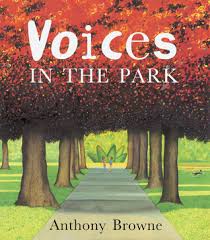




 Thoughts From Away